
Reverse engineering a part with no drawings: how scan-to-CAD-to-print works
The part has failed, the maker is long gone, and there are no drawings. Here's how we rebuild a working replacement from the broken original.
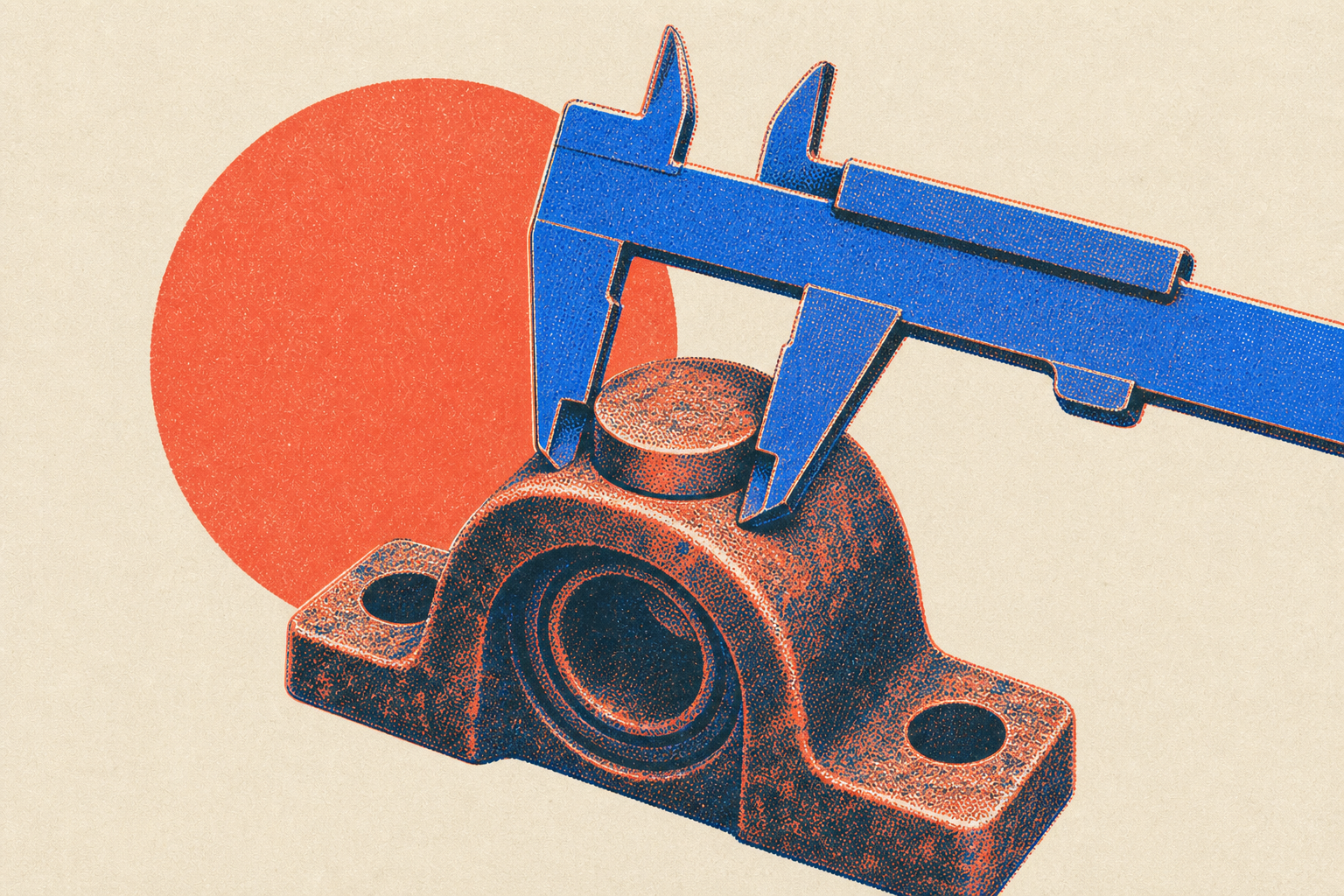
It's a familiar situation. A part has broken, the machine it belongs to is decades old, the manufacturer is long gone, and there isn't a drawing anywhere. The part in your hand is the only record of how it was made. Reverse engineering is how we turn that one surviving example back into something we can reproduce.
What reverse engineering actually means here
It comes down to three steps: capture the geometry, rebuild it as a clean CAD model, then print a replacement in a material that suits the job. The skill lives in the middle step — producing a usable model, not a rough copy of a worn-out part.
Step one: capturing the geometry
For simple parts, careful measurement with calipers is enough. For organic shapes, complex curves, or parts where every surface matters, 3D scanning captures the geometry as a dense mesh. We choose the method to fit the part — paying for a scan you don't need is as wasteful as trying to measure something too complex to measure by hand.
Step two: rebuilding it as CAD
A scan gives you a mesh — millions of triangles describing the surface, including every scratch, dent and bit of wear. That isn't something you can confidently print or modify. Our custom CAD work rebuilds the part as a clean, parametric model: true edges, correct dimensions, and the original intent restored. Because it's parametric, we can also correct the flaw that broke it, or adapt the part while we're in there.
Step three: material and print
The replacement should be at least as capable as the original. A bracket that sees heat wants a material that holds up to it; a part under load wants strength and stiffness. Reverse engineering is often a chance to upgrade — the original may have been moulded in whatever was cheap at the time, and a considered material choice can outlast it.
What we can and can't do
Honesty matters here. External geometry, fit and form we can capture and reproduce reliably. Internal features we can't see — hidden cavities, internal threads, the exact original material specification — we infer and confirm with you. We'll always tell you where we're reconstructing from evidence rather than measuring directly.
A recent example: reverse-engineering a ribber dial for a 100-year-old circular sewing machine — a part with no drawings, no supplier, and no replacement available anywhere. We captured it, rebuilt it in CAD, and printed a working replacement.
The fastest way to start is to send us clear photos of the part next to a ruler, and tell us what it does and how it failed.
Send us your part to quoteGot a project to print?
Upload your STL, STEP or mesh file. Get an instant price and same-week turnaround on most parts.