
Reverse Engineering
From a broken or obsolete part to a printable replacement.
Reverse engineering combines 3D scanning with CAD reconstruction — take a worn, broken or discontinued part and produce a clean, editable, printable replacement. Bicester3D's typical reverse-engineering job runs scan → mesh clean-up → CAD rebuild → print, with the rebuilt CAD file delivered to you alongside the physical part for future re-runs.
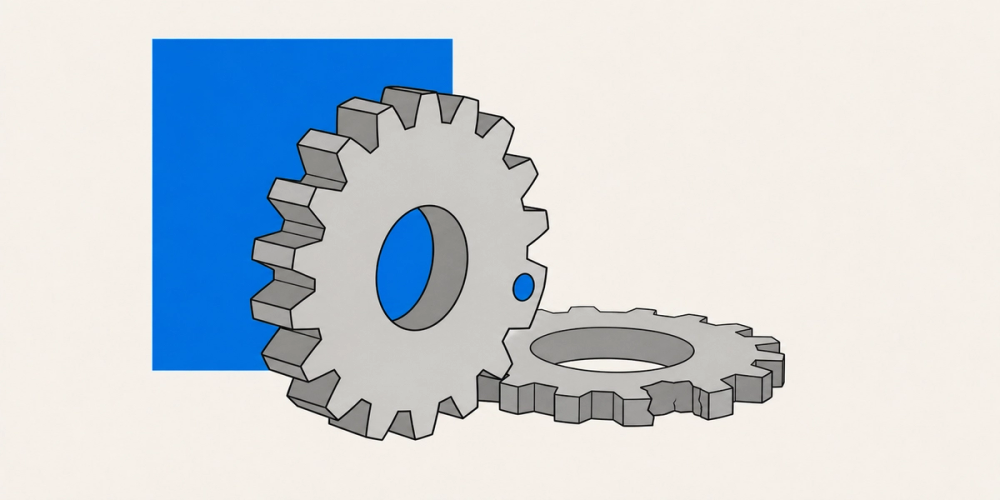
We use reverse engineering most often for:
- Discontinued spare parts — caravan and motorhome trim, vintage automotive, obsolete industrial machinery, ageing domestic appliances.
- Modifying or improving an original — add a feature, change a fitting, scale a part to a different size.
- Documenting an as-built object before destructive modification.
Typical turnaround for scan → CAD rebuild → first print is two working weeks. We deliver the editable file alongside the printed part so you (or we) can re-run it any time without rescanning.
REVERSE ENGINEERING FAQ
Scanning captures the geometry of an object as a mesh — useful for archival, inspection, or as the input to reverse engineering. Reverse engineering takes that mesh and rebuilds it as parametric CAD (with editable features like holes, fillets, bosses) — producing a file you can modify, re-order, or send to manufacturing. Most jobs want both: scan first, CAD second.
Yes — reconstruction from imperfect originals is one of the most common reasons people come to us. We'll scan what's there, infer the missing/worn geometry from symmetry and design intent, and produce a clean parametric CAD that represents the part as originally manufactured. Print or hand the file back, your choice.
Yes — the parametric CAD is the deliverable for our reverse-engineering service. Standard formats: STEP (universal), Fusion 360 (.f3d), Solidworks (.sldprt). The file has named features, dimensions and constraints — not just a triangulated mesh — so you can edit, re-version, or send to a different manufacturer if you ever need to.
Any of our FDM or SLA materials, matched to the original's function. PLA for visual prototypes, PETG for functional duplicates, ABS/ASA for heat or outdoor, polycarbonate for max strength, TPU for flexible/rubber-like, SLA grey for fine-detail showpiece restoration. We'll suggest the right material once we've seen the part and discussed where it lives.