
The machine outlives the catalogue
A 1997 Honda ST1100's mirror cowls are unobtainable; the bike outlived its own parts supply. On repair culture, pace layers, and what 3D printing changes for orphaned machines.
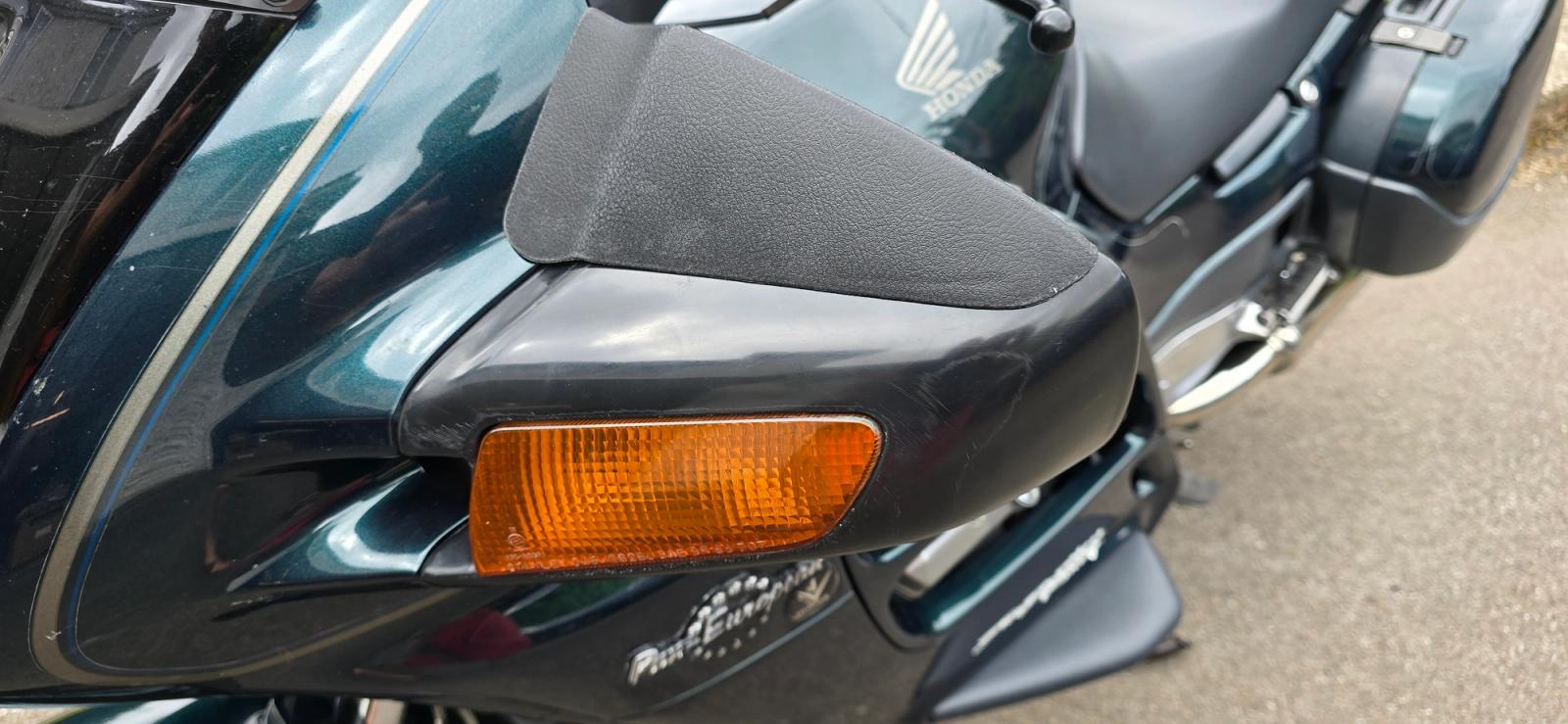
In the late 1980s Honda set its German research centre a problem: build a motorcycle for crossing Europe. Not a racer detuned for the road, not a Gold Wing shrunk to fit, but a machine for the specific job of covering a continent quickly, in all weather, for decades. The project was called Transeuropa. The machine it produced, launched in 1990, was the ST1100 Pan European: an 1,084cc V4 mounted longitudinally, shaft drive because chains wear out, and a fairing designed for motorway winter rather than the showroom floor.
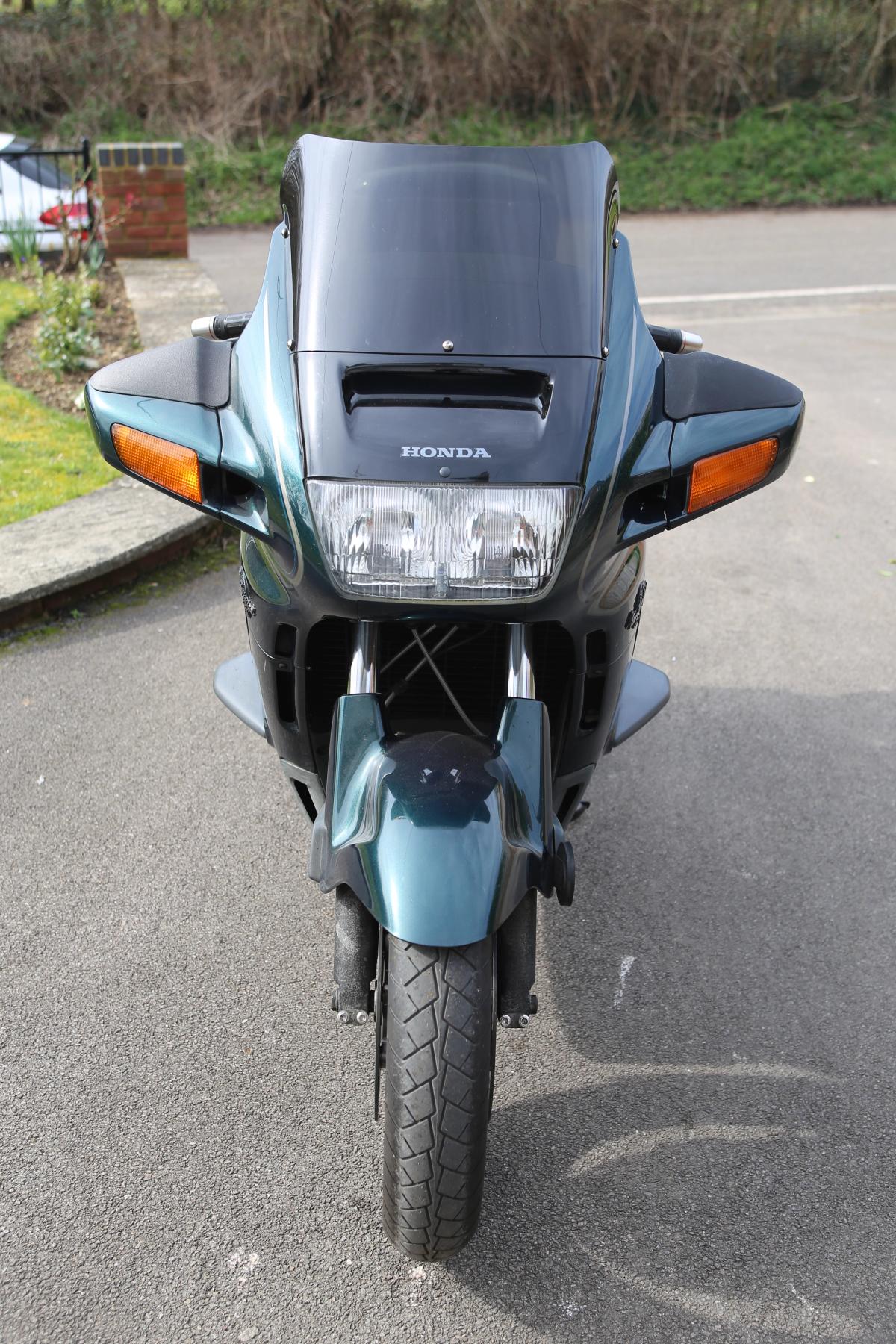
It worked. Police forces across Europe ran fleets of them for decades. The engines routinely clear 200,000 miles; the owners' forums document examples past 370,000, still touring. Honda built the ST1100 until 2002, and kept building the police version after the civilian model was retired. By any engineering standard it is a machine designed to last — and it does. What doesn't last is everything around it.
Machines age slower than the commerce that serves them
Stewart Brand has a useful idea, worked out for buildings in How Buildings Learn: complex systems are made of layers that move at different speeds. Fast layers innovate; slow layers stabilise; the friction happens where they meet. An old motorcycle is a slow layer: steel, aluminium and a service manual, happy to run for half a century if someone keeps the fluids fresh. The parts catalogue that supports it is a fast layer, driven by warehouse economics, minimum order quantities and the amortisation schedule of injection-mould tooling.
A part like a mirror cowl doesn't become unobtainable because it's hard to make. It becomes unobtainable because the mould was the expensive bit, the mould paid for itself twenty years ago, and no warehouse will hold a slow-moving plastic housing for a motorcycle that left production in 2002. Nothing is wrong with the design. The commerce simply moved on; the machine didn't. Most old vehicles that come off the road now die of paperwork, not engineering.
Colin's cowls
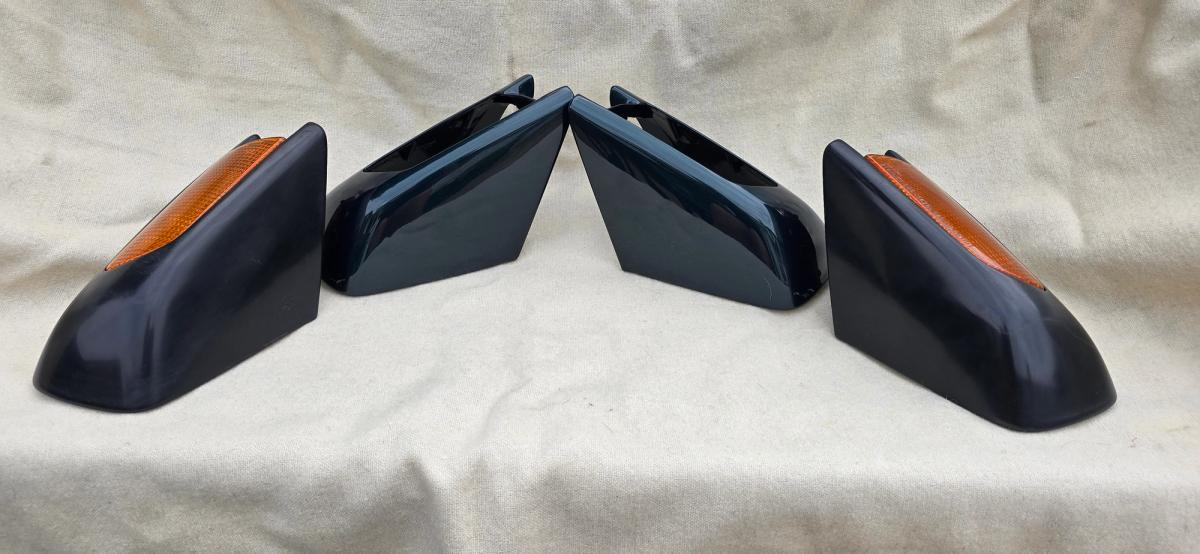
Colin W rides a 1997 ST1100, dark green, 29 years old. An accident took out both mirror cowls, the big fairing housings that carry the mirrors and front indicators. Honda's answer, in effect: we no longer make that machine. Colin's summary was blunter. Original cowls are unobtainable.
He had the wrecked originals plastic-welded and resprayed at body-shop prices, but strictly as museum pieces, boxed up for the day the bike is sold. For the bike he rides, he brought us files for the left and right cowls and rang to talk materials. The right answer was ASA: UV-stable, weather-resistant, the plastic modern OEMs mould exterior trim from. We printed in black so the parts could run unpainted. Both cowls came off the printer the day after the spools arrived. He collected them in person, then spent the hours an owner spends: wet-and-dry from 60 grit through 2,500, Farecla G3 compound, a satin black that sits comfortably next to 29-year-old paint. The original indicator lenses clicked straight in.
The part is a file now
The interesting shift isn't that printers got cheap. It's that a part can now exist as information. A mould lives in one place, has one owner, and gets scrapped when the accountants say so. A file is everywhere at once and never wears out. Once the geometry exists (measured from a broken original, scanned, or drawn by an owners' community that refuses to let a model die), manufacture becomes local and on demand. The tooling cost of a one-off is zero. The parts counter for a 29-year-old Honda is now any competent print bureau, and the lead time is measured in days.
The owners' clubs understood this before most of industry did. The files for Colin's cowls exist because ST1100 owners keep the model alive as a community, sharing geometry the way earlier generations shared workshop drawings and NOS rumours. That is repair culture doing what it has always done, with one new tool in the chain.
The idea is now respectable at every scale. Jay Leno keeps a 3D scanner and printer in the garage to remake unobtainable parts for a collection of two hundred cars; when the century-old feedwater heater on his 1907 White Steamer finally gave out, the fix was to scan the survivor, print the replacement pattern in plastic, and cast a new one in metal. Even the manufacturers have conceded the point: Nissan's NISMO Heritage programme reissues discontinued Skyline GT-R parts using 3D printing for the resin components, and Toyota runs a similar scheme for the Supra and the AE86. But heritage programmes serve halo cars. A workhorse sports-tourer from 1997 will never make the list, and that is exactly the gap distributed printing fills.
Maintenance is how machines survive their makers
Brand is currently writing a whole book on this. Maintenance: Of Everything is being drafted in public at Works in Progress, and its chapter on vehicles starts with motorcycles. Why motorcycles? Because “the combination of exceptional intimacy and exceptional danger invites exceptional bonding”; nobody writes six-million-copy philosophy books about repairing cars. In that chapter he returns to Robert Pirsig, whose Zen and the Art of Motorcycle Maintenance put it plainly half a century ago:
I don't think I'll ever sell it. No reason to, really. They're not like cars, with a body that rusts out in a few years. Keep them tuned and overhauled and they'll last as long as you do. Probably longer. Quality.
Pirsig's bike, a 1964 Honda Super Hawk, proved him right. It outlasted him: still running in 2019, 33,213 miles on the odometer, when his widow donated it to the Smithsonian. Hondas do this, given the care. A motorcycle that has been ridden, crashed, repaired, resprayed and re-engineered for 29 years isn't a degraded version of the 1997 original; it's the surviving version. Colin sanding through nine grades of wet-and-dry, and sending us his notes on what not to do (no T-Cut if paint might ever follow, and no acetone vapour on structural parts; he sacrificed the small pieces to learn that one), is exactly the craft Pirsig and Brand are describing. The technology's job is not novelty. It's continuity.
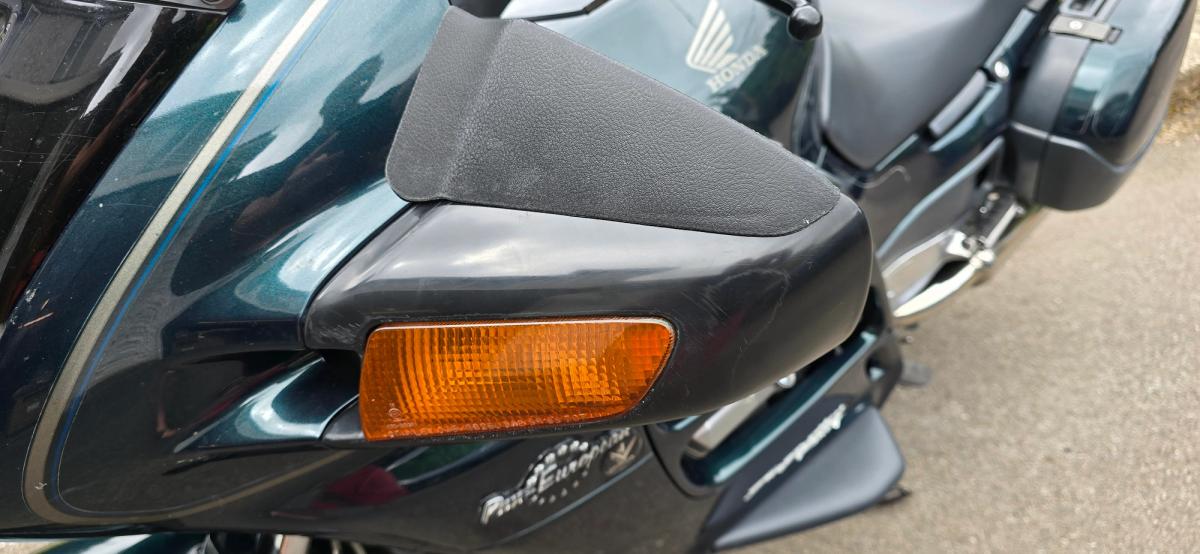
If you own something the catalogue has given up on, whether a bike, a caravan or a machine tool, the sequence is short: find or make the geometry; choose the material for the job the part actually does (sun, heat, vibration); print, finish, fit. The full account of Colin's cowls, including his finishing notes, is in the case study below.
Got a project to print?
Upload your STL, STEP or mesh file. Get an instant price and same-week turnaround on most parts.