
A second nozzle in the workshop: what the Bambu Lab X2D changes for your parts
We've added a dual-nozzle printer to the workshop. A dedicated support nozzle and clean multi-material printing mean better finishes, genuine two-material parts and less waste — with the same turnaround you're used to.
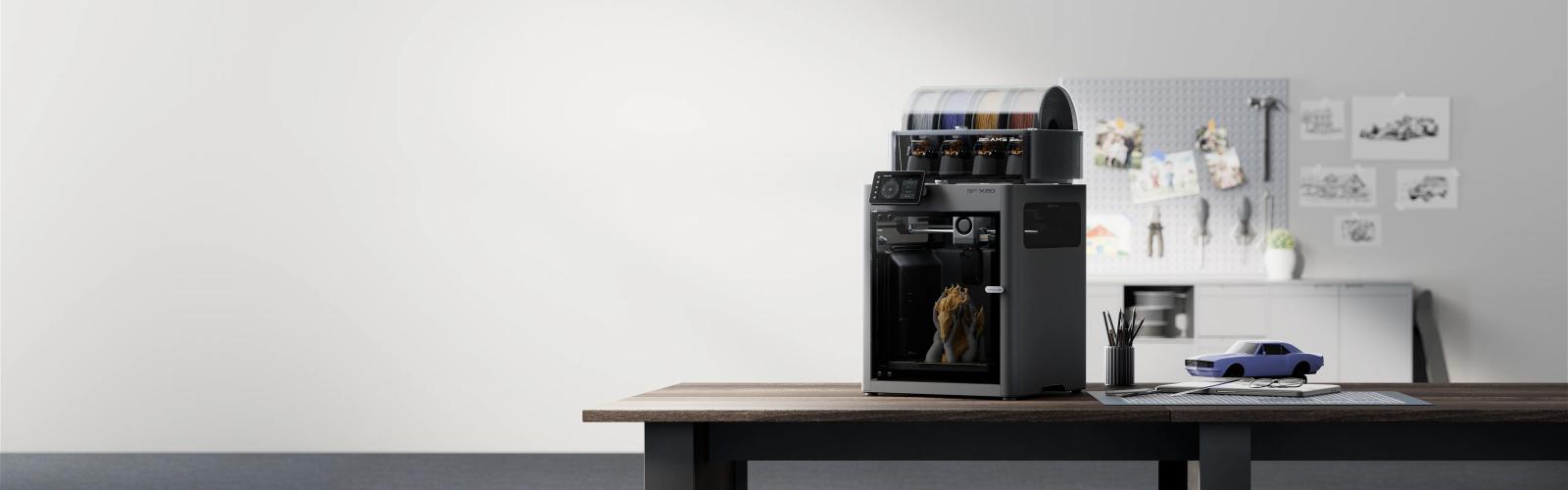
There's a new machine on the bench: a Bambu Lab X2D. It looks much like the rest of our line, with one difference that matters, it prints with two nozzles instead of one. That sounds like a small change. In practice it quietly fixes three things customers have always paid for in finishing time, wasted material, or design compromises they didn't know they were making.
The obvious win: supports that actually come off cleanly
Any part with overhangs, bridges or internal cavities needs support material underneath it while it prints. On a single-nozzle machine that support is the same plastic as the part, printed right up against it, so it leaves marks and takes real effort to remove — the fiddly, time-consuming step that adds cost and can scar a visible face. The X2D can dedicate its second nozzle to a separate support material that's designed to break or peel away cleanly. The result is a better surface on the faces that matter, less hand-finishing, and complex geometry that comes off the plate closer to finished.
True two-material and two-colour parts, without the waste
Multi-colour printing isn't new, but the usual method swaps a single nozzle between colours and purges the old one into a waste block every time it changes — slow, and it burns through filament you pay for. The X2D switches mechanically between two nozzles instead, so there's far less purging and far less waste on a two-material job. More usefully, the two nozzles can run genuinely different materials in the same part: a rigid body with a flexible TPU seal or grip, for example, printed in one pass rather than made as two pieces and assembled. That opens up parts we'd previously have had to split or turn away.
What we'd reach for it on
Detailed models and enclosures with lots of overhangs, where support marks used to show. Two-colour parts — logos, signage, labelled housings — where you want clean colour separation without a seam. And functional parts that combine hard and soft in one piece, like a bracket with an integrated grip or a housing with a built-in gasket. It shares the specs we rely on across the workshop — a heated chamber and a 300°C hotend — so the engineering materials you'd already trust it with are all in range.
Same turnaround, more options
Nothing about our lead times changes — this adds capacity and capability, it doesn't slow anything down. It simply means that when a job calls for a cleaner finish, a second colour or a second material, we can now do it properly in one print rather than working around the limitation. If you've got a part in mind that fits any of that, tell us what it does and where it lives, and we'll tell you whether the extra nozzle earns its place.
Get a quoteGot a project to print?
Upload your STL, STEP or mesh file. Get an instant price and same-week turnaround on most parts.