
PETG 3D PRINTING
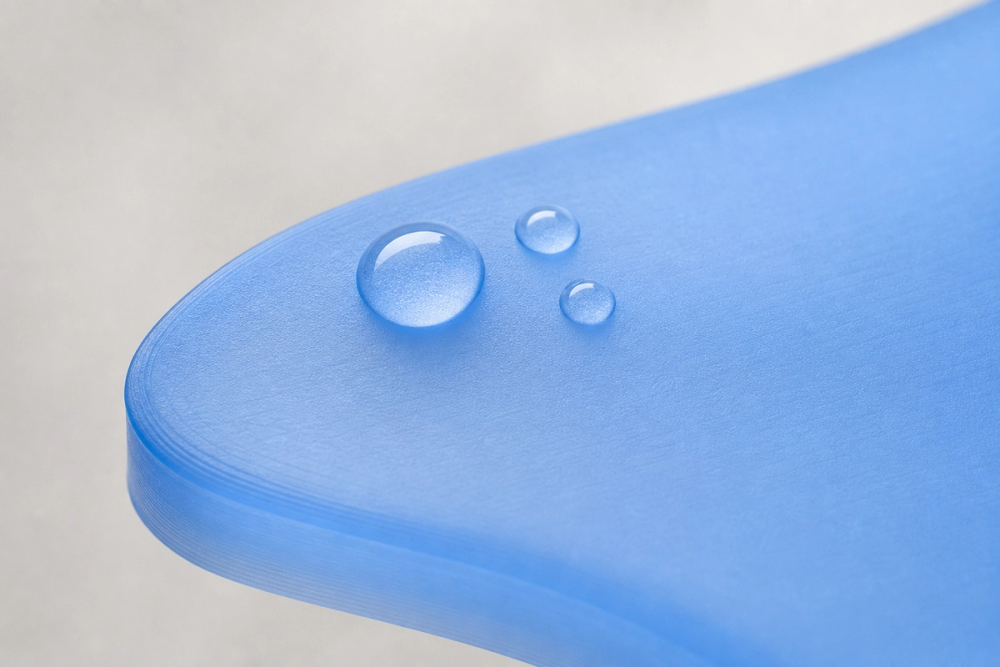
PETG — polyethylene terephthalate glycol — is the toughness-and-chemistry specialist of the FDM catalogue. Where PLA is rigid and snaps, PETG flexes; where PLA degrades outdoors, PETG holds. It's the default choice when a print needs to survive mechanical stress, weather, or contact with liquids. Bicester3D supplies custom PETG prints with ±0.2mm FDM tolerance, most orders dispatched within 24 hours, and pricing from £5 per part. Upload an STL or STEP for an instant quote — no minimum order, no setup fees.
WHEN PETG IS THE RIGHT MATERIAL
- Functional mechanical parts — brackets, clips, hinges, enclosures. Flexes rather than cracks under load.
- Outdoor and weather-exposed parts — signage mounts, garden fixtures, sensor housings. UV-stable, not just UV-tolerant.
- Liquid-contact parts (non-food) — tanks, funnels, fittings. Resists acids, alcohols, oils, cleaning agents.
WHEN PETG IS THE WRONG MATERIAL
- Display-quality surface finish — PETG strings more than PLA. Use SLA resin for visible parts.
- Permanent direct sun over years — PETG yellows slowly. Use ASA for permanent UV.
- High-temperature service (>70°C) — PETG softens. Use ABS, ASA or polycarbonate.
PETG OR ABS?
Both are tough, both work for engineering jobs. The decision usually comes down to heat tolerance, post-processing and printability.
- ·Flexes before it breaks under mechanical load
- ·Stable outdoors over years — yellows slowly
- ·70–80°C heat tolerance covers most jobs
- ·Prints on a standard machine, similar cost to PLA
- ·95–105°C heat tolerance — engine-bay safe
- ·Acetone-smoothable to injection-mould-grade finish
- ·Higher impact resistance than PETG
- ·Demanding to print — enclosed printer + heated bed required
Pick the right material for your part
PETG is our default for most engineering parts. If you need permanent outdoor use, fine display detail, or rubber-like flex, browse the alternatives by use-case.
TECHNICAL DATA
| Property | Value | Notes |
|---|---|---|
| Tensile strength | 50 MPa | Slightly lower than PLA |
| Elongation at break | 120% | Highly ductile — flexes before it breaks |
| Heat deflection temp | 70–80°C | Better than PLA, below ABS |
| Shore D hardness | 78 | Tough rather than hard |
| Density | 1.27 g/cm³ | Similar to PLA |
| Print temperature | 220–250°C | Narrower process window than PLA |
| Bed temperature | 70–80°C | Heated bed required |
| Chemical resistance | Good | Resistant to acids, alcohols, oils, mild solvents |
| UV stability | Moderate | Slow yellowing over years outdoors |
| Water absorption | Low | Prints dimensionally stable in damp environments |
| Post-processing | Sandable, drillable | Not easily solvent-smoothed |
| Clear option | Yes | Transparent PETG available to order |
WHAT WE PRINT IN PETG
Representative PETG projects from last quarter's workshop queue:
- Conveyor-line sorting jigs for a Milton Keynes fulfilment centre — daily-use fixtures replacing laser-cut acrylic originals that kept cracking. PETG outlasted the acrylic 4:1 in the trial run.
- Outdoor sensor enclosures for a weather-monitoring installation across three Oxfordshire farms — UV-exposed, rain-exposed, running 18 months and counting.
- Electronics project housings — LED driver enclosures, GPIO breakouts, battery caddies. Clear PETG option for visible-component designs.
- Replacement appliance parts — a discontinued dishwasher spray arm, a VW camper van cupholder, a broken garden-tool handle. Reverse-engineered from the original, printed in PETG for the mechanical durability.
- Automotive interior test parts — prototype trim clips and dashboard mount brackets, pre-production.
PRICING
Per-part pricing from £5. PETG runs slightly more expensive than PLA due to material cost. No minimum order. No setup fees. Quotes valid for 30 days.
GET YOUR PETG QUOTE
Upload your STL, STEP, or mesh file to the quote tool. Price returns in seconds. Card, invoice (trade accounts) and bank-transfer payment accepted. Most PETG orders are dispatched within 2 working days.
PETG FAQ
PETG is tougher — it flexes rather than cracking under load. PLA has slightly higher tensile strength (59 vs 50 MPa) but only 7% elongation at break, versus PETG's 120%. For functional parts, PETG's ductility wins. For rigid non-stressed parts, PLA is fine.
Yes. PETG is UV-stable for months to years of outdoor use, with slow yellowing over time. For permanent direct-sun exposure over many years, ASA is the better choice. For seasonal or part-shaded outdoor use, PETG is reliable.
The raw pellets can be food-grade, but the printed part is not. Layer lines harbour bacteria, and the print process is not sanitised. Bicester3D does not certify any FDM prints as food-safe. For food contact, use a post-processing food-safe epoxy sealant or choose a different manufacturing method.
PETG resists most acids, alcohols, mild solvents, oils, and cleaning agents. It's not resistant to acetone, MEK, or strong oxidisers. For chemical-specific applications, check a chemical-compatibility chart before specifying.
Yes. Clear PETG is available to order. Note that FDM layer lines remain visible even in clear PETG — it's translucent rather than glass-clear. For optically clear prints, SLA resin is a better choice.