
From photogrammetry to silicone bust, 8-part PLA mould tooling for an A-level art project
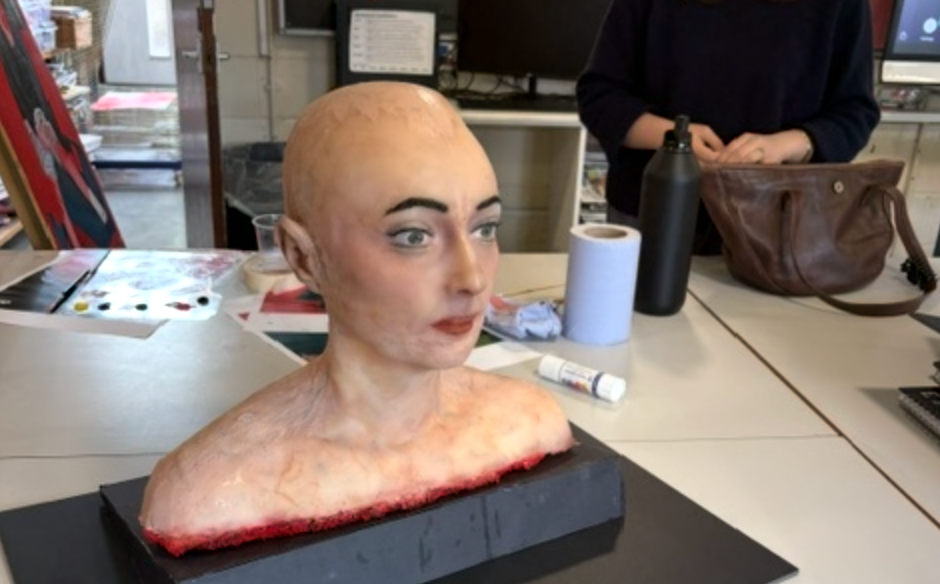
An A-level art student in the Midlands wanted to cast a full silicone portrait of her mother. We took the photogrammetry-derived mesh and printed the mould tooling in PLA, split across 8 parts so the geometry could be assembled, cast and demoulded cleanly. The student finished and painted the cast bust as her final coursework submission.
What they came to us with
An A-level art student arrived with a portrait sculpture brief: cast a life-size silicone bust of her mother as the centrepiece of her final coursework. The capture had been done by photogrammetry — a clean digital mesh of the subject — but the workflow downstream of the scan was the hard bit. A life-size head-and-shoulders piece is larger than a single FDM build volume, the geometry has overhangs and undercuts that don't release cleanly from a one-piece mould, and the cast surface had to be smooth enough to read as skin once painted. The student needed mould tooling that solved all three problems in one pass.
What we did
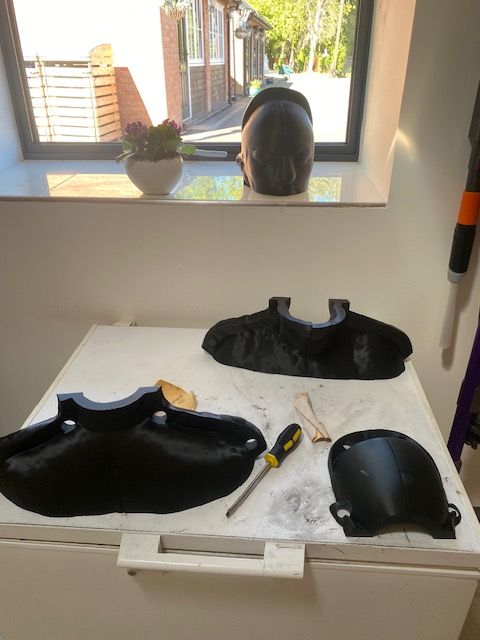
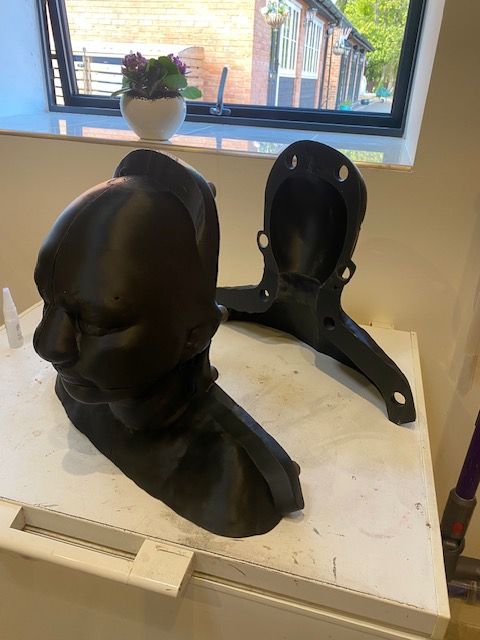
We took the photogrammetry mesh, prepared it for tooling, and split the mould across eight PLA parts that assembled into a single closed shell. The parting lines were chosen deliberately — sitting on natural form transitions (the back of the skull, the underside of the jaw, the shoulder line) — so each section could pull cleanly away from the cured silicone when the mould was disassembled, and so the shell registered tightly together when closed. Black PLA was used throughout: it reads well against the pale silicone during casting and finishing, and FDM in PLA hits the rigidity-and-surface trade-off you want from sacrificial mould tooling without the cost of an SLA part at that scale.
The student assembled the eight parts into the closed mould, poured silicone to cast the bust as a single piece, then disassembled the shell section by section to release the cast intact. The raw silicone bust then went through the finishing and painting passes that produced the final piece.
“Photogrammetry capture, 8-part PLA mould tooling, silicone casting and finish — a full sculpture workflow inside a single A-level project.”
Result
The finished silicone portrait — sculpted, cast, finished and painted — went into the student's A-level art submission as the headline piece of her coursework. The project shows the full chain that becomes possible when 3D printing sits in the middle of a creative workflow: photogrammetry capture, CAD preparation, multi-part FDM tooling, silicone casting and fine-art finishing — handled by an A-level student inside a single coursework cycle. The kind of project that would have been an industrial workshop job a decade ago.
Got a project like this?
Upload your STL, STEP or mesh file. Get an instant price and same-week turnaround on most parts.