
Caravan & motorhome replacement parts: printing the plastics you can't buy
Discontinued catches, stays, winders and brackets don't have to write off a good caravan. How we reverse engineer and reprint obsolete caravan and motorhome plastics in UV-stable materials.
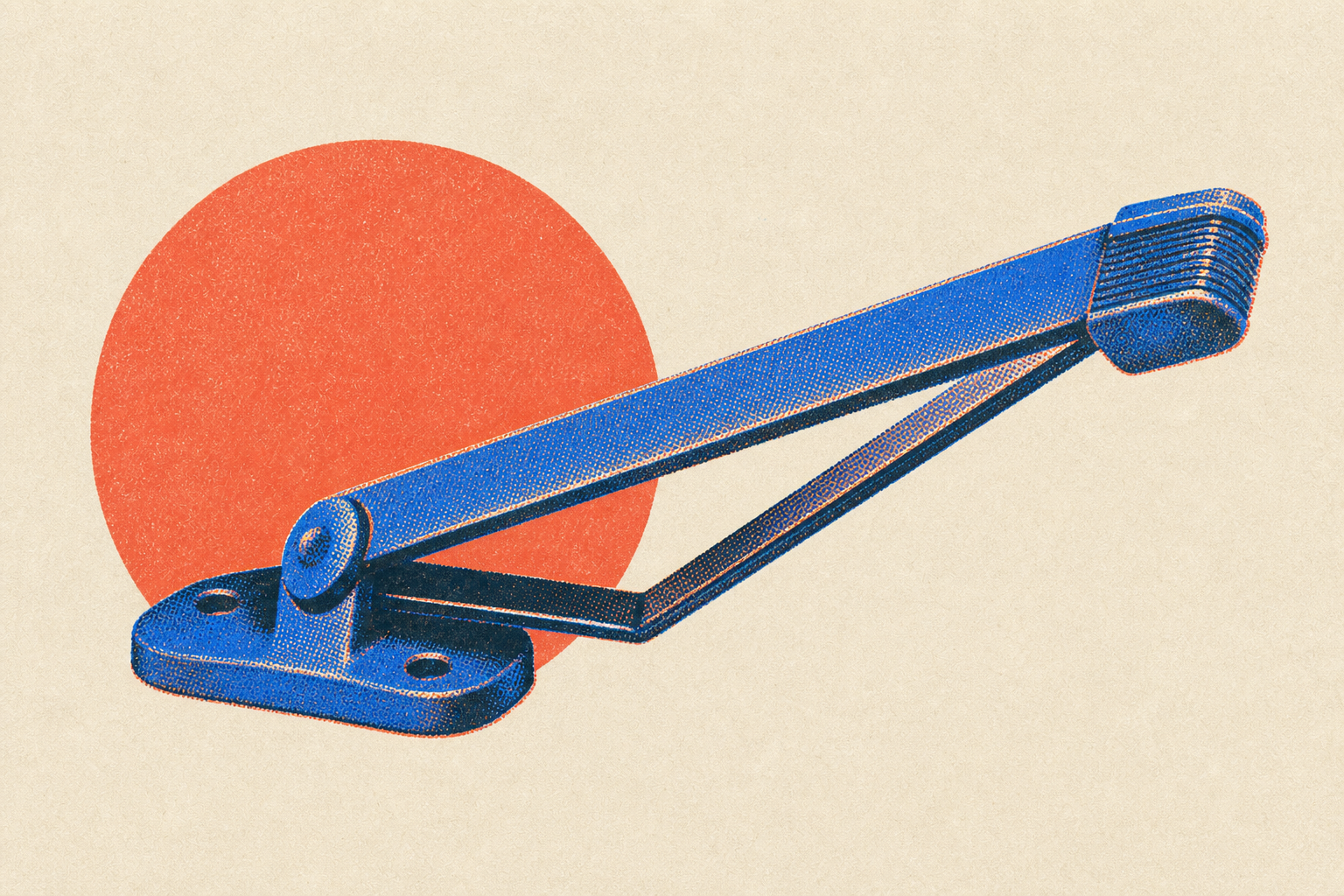
Somewhere in Britain right now, a caravan worth twenty thousand pounds is out of service because of a plastic catch that cost pence to mould. It might be a window stay, a locker latch or a rooflight winder — small parts with one thing in common: the manufacturer stopped making them years ago. Reprinting them is exactly what our caravan parts service exists for.
If you've been through this, you know the routine. The dealer can't get it. The breaker's yard has three of the wrong model. The owners' forum thread from 2019 ends with someone asking "did you ever find one?" and no reply. Meanwhile the van sits with a window that won't stay open or a locker that won't stay shut.
Why caravan plastics are so hard to buy
Caravan and motorhome interiors are built from injection-moulded parts designed for a single production run. When the model year changes, the fittings often change with it, and the tooling for the old moulding is shelved or scrapped. Multiply that across dozens of manufacturers — several of which no longer exist — and hundreds of model years, and you get an enormous long tail of parts that were only ever made once.
Even when a part technically survives, the supply chain often sells assemblies rather than components. A snapped £2 end cap can mean buying a complete window stay, a full blind cassette, or in some cases a whole window — if the assembly is available at all. For older vans it frequently isn't.
The parts we're asked to reprint
The requests that reach us are remarkably consistent: window stay ends and catches, cupboard and locker latches, blind and flyscreen end caps, rooflight winder handles, vent covers, water filler caps and housings, table leg brackets, awning rail end stops, shower head holders and small bathroom fittings. Almost all of them are palm-sized or smaller, geometric rather than sculptural, and completely unavailable.
That combination — small, well-defined, obsolete — is close to ideal for 3D printing. It's the same problem we solved for a 1997 Honda ST1100 whose mirror cowls were unobtainable: the vehicle outlived the manufacturer's willingness to keep making its plastics.
From broken part to reprint
Most caravan jobs are reverse engineering jobs: there's no file, just a broken original. Our process is built around that. Post us the part — broken is fine, in several pieces is usually fine — or send clear photos with measurements, and we rebuild it as a clean CAD model. You end up with a printable model on file, which means the next time a catch breaks, replacements are a matter of days rather than another forum search.
Rebuilding in CAD rather than simply copying has a quiet advantage: we can fix the reason it broke. Injection-moulded caravan parts are moulded thin to save material, and they snap at predictable points — a pivot hole, a thin web, the root of a clip. When we redraw the part we can thicken that section, add a fillet or adjust the geometry slightly so the replacement outlasts the original.
Materials that survive life on a van
Exterior parts need to cope with sunlight above all. Most original caravan fittings are ABS, which is why twenty-year-old catches chalk, fade and go brittle. We print exterior replacements in ASA — a UV-stable evolution of ABS that keeps its colour and toughness outdoors. On a dark roof in summer, surface temperature is a real consideration too, and ASA handles what a parked van can throw at it.
Inside the van the demands are lighter, and PETG covers most latches, brackets and trim at lower cost. Flexible parts — blanking caps, grommets, anything that has to snap over a lip without cracking — print well in TPU.
| Property | Value | Notes |
|---|---|---|
| Exterior catches, stays, vents | ASA | UV-stable; originals are usually ABS, which fades and goes brittle |
| Roof fittings and dark surfaces | ASA or ASA-CF | Handles summer surface temperatures; carbon fibre adds stiffness |
| Interior latches, hinges, brackets | PETG | Tough, economical, good colour range |
| Flexible caps, grommets, seals | TPU | Snap-fit and sealing parts that mustn't crack |
| High-load brackets and table legs | PETG-CF or polycarbonate | Where stiffness under sustained load matters |
A worked example
A representative job: the owner of a late-1990s coachbuilt motorhome needs window stay end caps. The moulding is long discontinued, and without them the windows won't stay open. They post us one broken cap. We rebuild it in CAD, thicken the clip root that failed, and print four in ASA — two to fit and two as spares for the drawer. A job like this typically lands between £25 and £45 including the modelling work, and reprints from the finished model cost a fraction of that. This example is illustrative rather than a specific customer order, but it's assembled from the shape of jobs we quote every week.
What we can and can't do
Being straight about the limits: we don't reproduce parts that are still in production and protected by design rights — this is a service for genuinely unavailable parts. We don't print anything for the gas system or gas appliances, nothing for brakes, hitches or chassis, and nothing we make is a certified habitation-safety item. We can't print replacement window glazing. And while we can usually get close on colour, an exact match to a faded 25-year-old moulding isn't realistic — a clean part in a sympathetic colour is the honest outcome.
On strength: a printed ASA part is tough and far more UV-stable than the brittle original it replaces, but printed parts are weakest between layers, so orientation matters. We design and orient each part so the working load runs along the layers rather than across them — one more reason a rebuilt CAD model beats a straight copy.
How to start
If you already have a model file, upload it for an instant price. If all you have is the broken part, get in touch and we'll tell you within a working day whether it's a sensible job — most are. Straight reprints from an existing model are usually dispatched within 24 hours; reverse-engineered parts add the modelling time up front, and once the model exists, every future spare is quick.
Get a quote or send us the broken partGot a project to print?
Upload your STL, STEP or mesh file. Get an instant price and same-week turnaround on most parts.